
South Africa: From the Cape to the Big Five
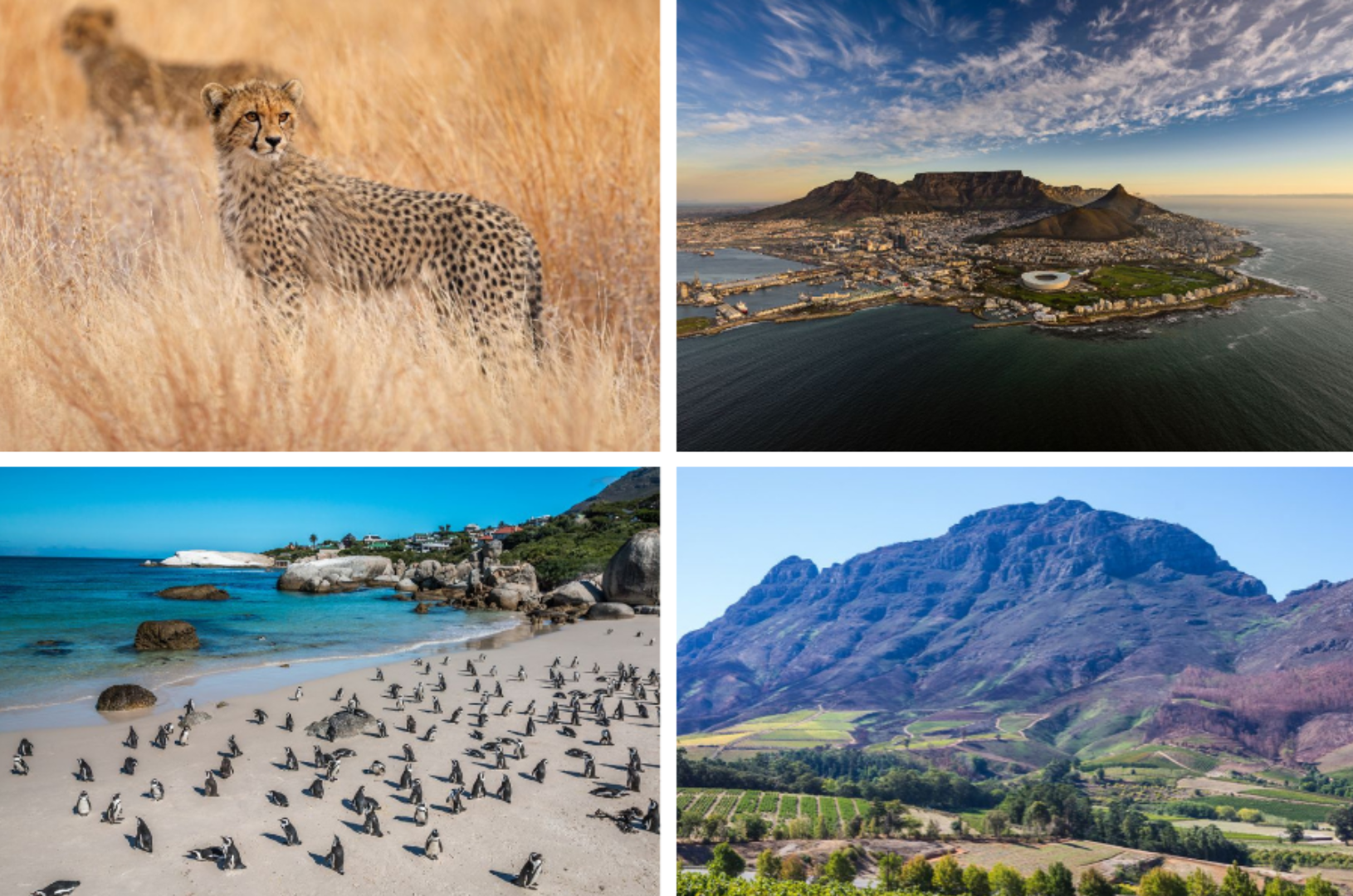
South Africa is one of the most diverse travel destinations in the world. Here, where world-class safari, global-standard cities, fine wine regions, dramatic coastlines, and mountain ecosystems coexist within a single, highly accessible framework.
Your South African Holiday is heaviliy defined by how you structure it. It rewards sequencing, pacing, and an understanding of regional variation. A poorly designed itinerary can feel fragmented. A well-designed one becomes one of the most complete travel experiences anywhere globally.
South Africa offers multiple parallel travel systems operating at a consistently high standard:
- A globally competitive safari industry
- A fully developed fine wine and culinary economy
- A dramatic and accessible coastline system
- A cosmopolitan urban centre in Cape Town
- A mature private conservation network
This creates one defining advantage: it reduces compromise. You do not need to choose between safari quality and urban sophistication, or between wilderness and comfort. South Africa allows integration of all elements within a single journey.
Understanding South Africa as a Travel System
A successful itinerary depends on understanding South Africa not as a map of provinces, but as a set of interconnected experiential zones.
The northeastern safari belt is anchored by the Kruger ecosystem and its surrounding private reserves. The Western Cape operates as a self-contained world combining Cape Town, coastal drives, and the Winelands. The southern coastline extends through forest, lagoon, and marine systems. Scattered throughout the country are specialist conservation regions that function as standalone safari alternatives.
Each of these zones operates independently in climate, rhythm, and character.
Safari in South Africa: A Highly Engineered Wildlife System
South Africa’s safari model differs fundamentally from East Africa. Rather than vast open ecosystems, it combines national parks with an extensive network of private game reserves. This creates a more controlled, often more intimate wildlife experience.
The broader Kruger ecosystem remains the foundation of safari travel, but the defining layer sits within its western boundary: a series of unfenced private reserves that share the same wildlife system while operating under entirely different rules.
Reserves such as Sabi Sand Game Reserve, Timbavati Private Nature Reserve, and Klaserie Private Nature Reserve are not separate ecosystems, but extensions of the greater Kruger landscape. Wildlife moves freely between them, unconstrained by fences, yet the experience within each reserve is significantly more refined.
These private reserves operate with strict vehicle limits, controlled lodge density, and, critically, off-road driving access. This allows guides to track animals beyond fixed road networks, positioning vehicles with precision and often maintaining sightings for extended periods.
Guiding is a defining variable. Rangers and trackers work as coordinated units, interpreting tracks, alarm calls, and environmental signals in real time. The result is a safari that unfolds as a sequence: following a leopard through terrain, observing predator-prey dynamics, or remaining with a sighting long after other vehicles would be required to move on.
Sabi Sand Game Reserve: The Benchmark Safari Environment
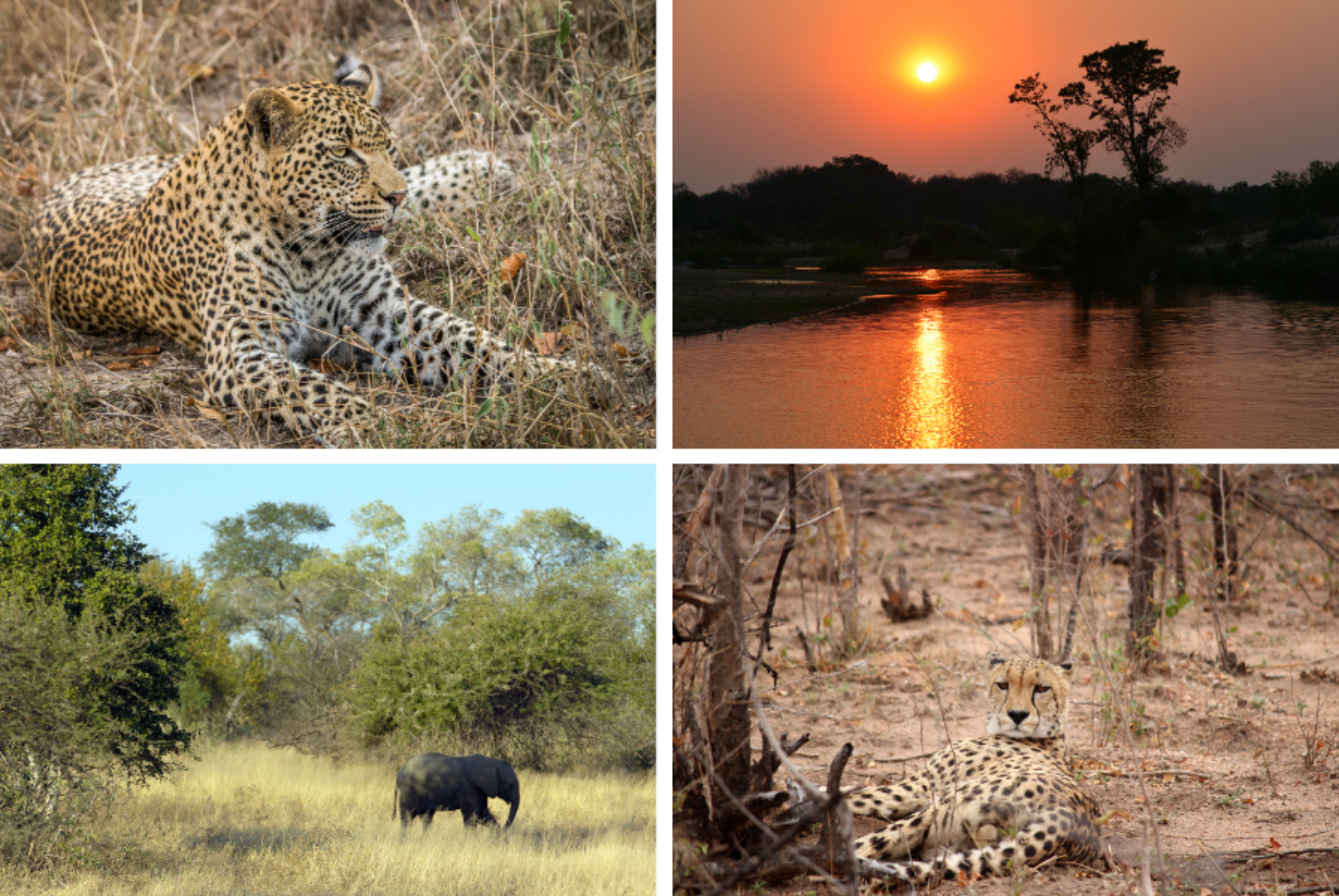
The Sabi Sand Game Reserve is widely regarded as the most refined safari environment in Africa.
Its defining characteristic is leopard density. Encounters are not rare events but regular occurrences, often unfolding over extended periods due to deep habituation of wildlife to safari vehicles. This allows for a level of behavioural observation that is difficult to replicate elsewhere.
A critical structural advantage is off-road driving access. This fundamentally changes the safari experience by allowing guides to track animals beyond fixed road networks, resulting in immersive, close-range wildlife encounters.
Guiding in this region is highly specialised. Trackers and guides operate as coordinated units, interpreting subtle environmental indicators to anticipate animal movement. The result is not simply sightings, but extended narratives of predator and prey behaviour.
A minimum stay of three nights is essential, with four to five nights representing the optimal structure for full immersion.
Timbavati and Klaserie: Low-Density Wilderness Alternatives
Adjacent to Sabi Sand, the Timbavati and Klaserie reserves offer a more understated safari experience.
Wildlife presence remains strong, including all members of the Big Five, but sightings are less predictable and vehicle density is significantly lower. This creates a more naturalistic and less curated feeling of wilderness.
These areas are best suited to travellers prioritising seclusion and space over consistent wildlife density.
Madikwe Game Reserve
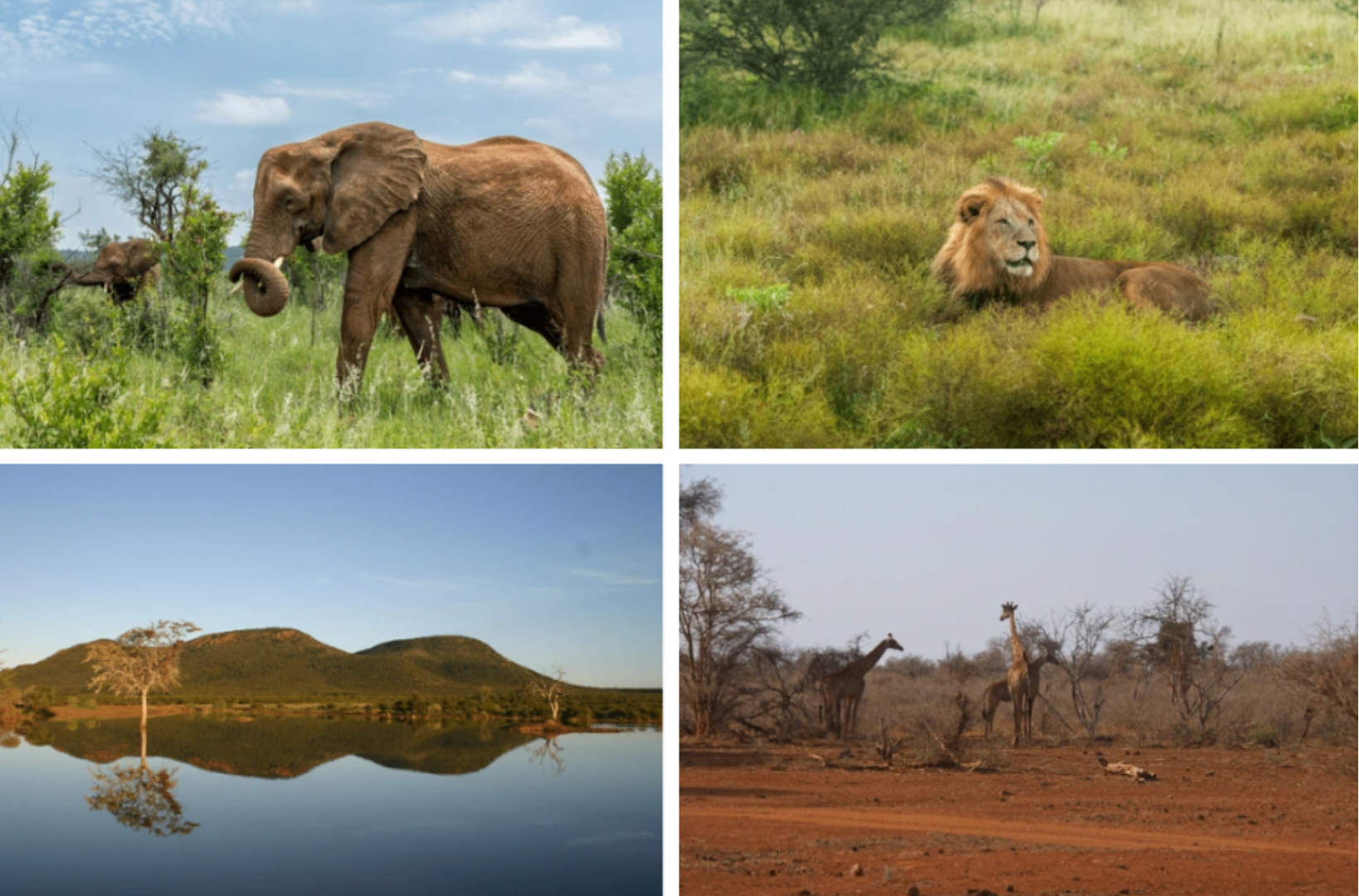
Madikwe Game Reserve sits on South Africa’s northwestern border with Botswana. Unlike the more heavily visited reserves of the Kruger system, Madikwe has a sense of space and understatement that defines the experience from the moment you enter.
Covering over 75,000 hectares, it is one of South Africa’s largest malaria-free Big Five reserves, making it particularly appealing for families and travellers seeking a high-quality safari without medical constraints. The landscape is a transition zone between arid Kalahari scrub and more fertile bushveld, which gives the reserve a distinctive, slightly rawer aesthetic compared to the greener eastern regions of the country.
Wildlife in Madikwe is both abundant and diverse. Elephant, lion, leopard, buffalo, and rhino are all present, alongside strong populations of African wild dog, one of the reserve’s signature conservation successes. Sightings tend to feel less engineered than in more concentrated private reserves, not because wildlife is scarce, but because the environment is more expansive and less densely trafficked: vehicles are fewer, and game drives often feel unhurried, with long stretches of uninterrupted wilderness between sightings.
Madikwe is ideal for travellers building a broader South African itinerary. It is not positioned as a high-density photographic safari destination in the same way as Sabi Sand. Madikwe often functions as a complement to more intensive safari regions further east.
Private Reserves and Boutique Conservation Areas
Across Limpopo and Mpumalanga, smaller private concessions provide highly exclusive safari environments.
These properties typically operate with strict vehicle limits, low accommodation density, and highly personalised guiding. Wildlife sightings are more variable, but the sense of exclusivity is significantly higher.
These regions are best positioned as extensions or alternatives for travellers prioritising privacy over predictability.
Cape Town: A Global City Integrated with Nature
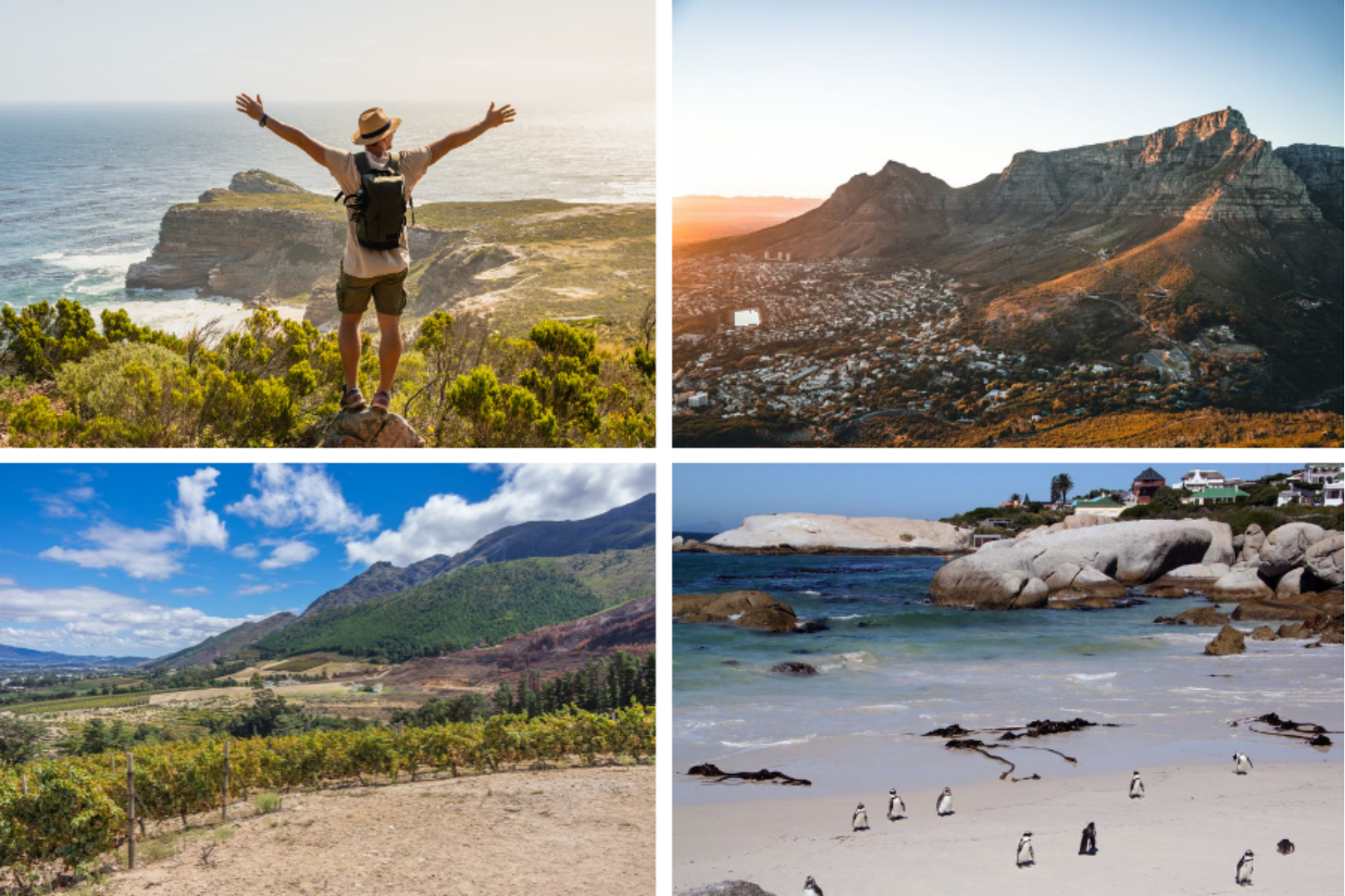
Cape Town is one of the few cities globally where urban life, mountain systems, and coastline exist in immediate proximity.
Table Mountain functions as the city’s defining geographical anchor, shaping both orientation and visual identity.
The Atlantic Seaboard represents the highest concentration of luxury coastal living, with ocean-facing properties that combine proximity to nature with immediate access to urban infrastructure. Areas such as Clifton and Bantry Bay define this segment.
The Cape Peninsula provides a structured natural circuit that includes Chapman’s Peak Drive, Cape Point, and the Boulders Beach penguin colony. Each stop represents a distinct ecological transition, from mountain cliffs to ocean wilderness.
Cape Town also operates as a cultural and culinary centre. The city supports a highly developed dining ecosystem, including globally recognised restaurants such as La Colombe, where South African ingredients are executed through a refined international lens.
The Cape Winelands: Controlled Landscape and Culinary Precision
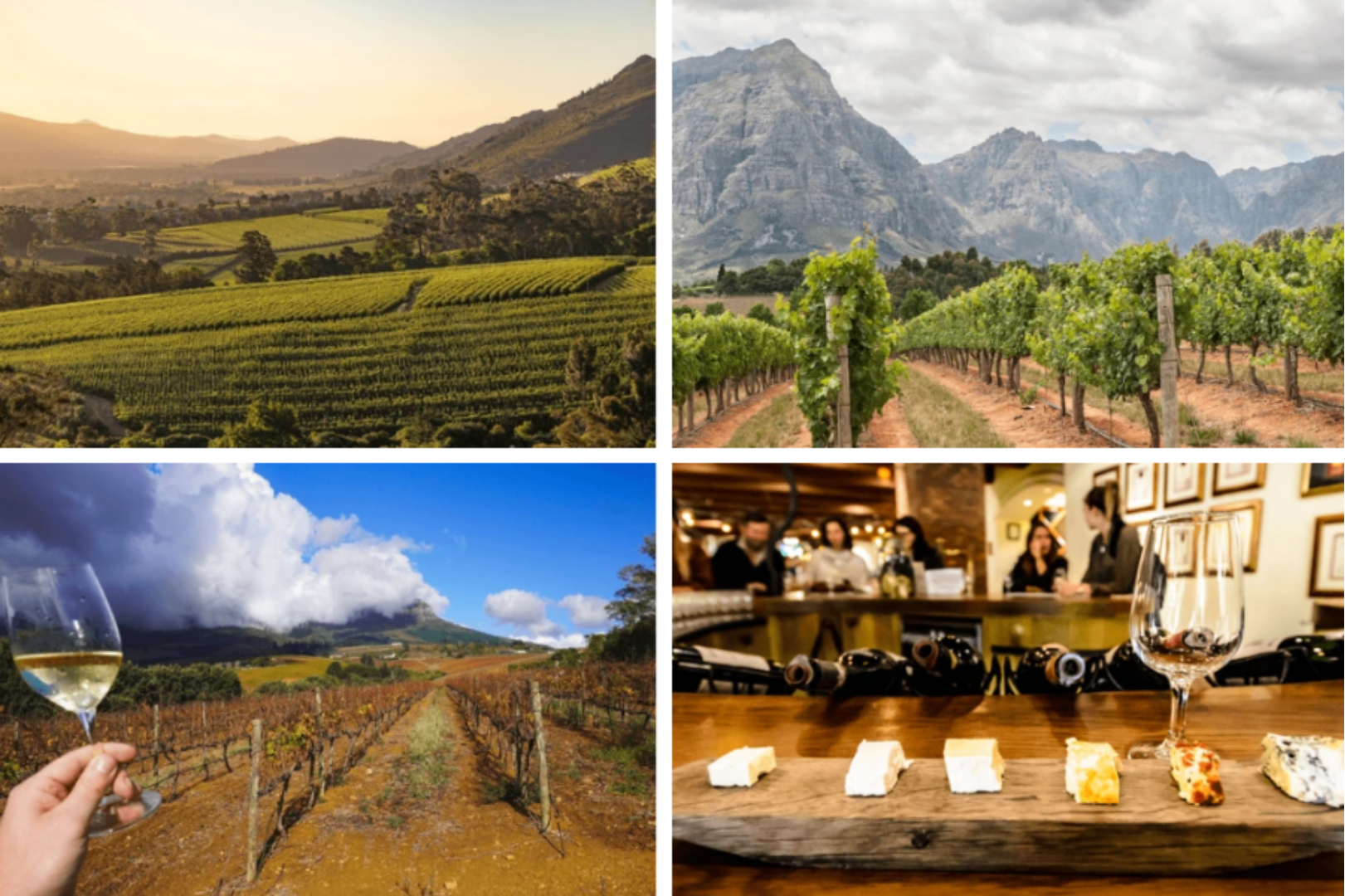
The Cape Winelands form one of the most refined and geographically concentrated wine regions in the world, with several key estates located within easy reach of Cape Town. Each area has its own climate, character, and winemaking identity, making the region unusually diverse for its size.
Just 40–50 kilometres from the city, Stellenbosch stands as the historic heart of South African wine. Often regarded as the capital of the Cape Winelands, it is home to more than 200 estates set among oak-lined streets, mountain backdrops, and rolling vineyards. The region is particularly known for structured reds such as Cabernet Sauvignon, Merlot, and Pinotage, which reflect both its heritage and its varied terroir.
Further afield, around 75 kilometres from Cape Town, Franschhoek offers a more curated and gastronomic experience. Founded by French Huguenots, the valley has evolved into a destination defined as much by cuisine as by wine. Sheltered by surrounding mountains, it produces elegant Chardonnay and Sauvignon Blanc, and is widely considered the culinary centre of the Winelands.
Closer to the city, Constantia sits uniquely within Cape Town itself. As the oldest wine-producing region in South Africa, it carries a distinct historical weight while remaining fully integrated into the modern urban landscape. Its cool maritime climate is ideal for Sauvignon Blanc, and it is also home to the legendary Vin de Constance, a historic sweet wine once prized in royal courts.
To the east, roughly 60 kilometres from Cape Town, Paarl offers a warmer, drier climate that produces fuller-bodied wines. The region is particularly known for robust Shiraz and expressive Chenin Blanc, with estates such as Fairview playing a leading role in its reputation. The landscape here feels broader and more open, with vineyard slopes stretching toward dramatic granite formations.
Finally, just 20–30 kilometres from the city centre, Durbanville represents one of the closest and fastest-growing wine regions. Elevated and influenced by cooling Atlantic breezes, it has gained recognition for crisp, aromatic Sauvignon Blanc. Its proximity to Cape Town also allows for sweeping views of the city and Table Bay, making it both accessible and visually distinctive.
Together, these five regions form a tightly clustered yet remarkably varied wine landscape—one that can be experienced across a single journey from the heart of Cape Town into the surrounding valleys and mountains.
The Garden Route: A Linear Coastal Ecosystem
The Garden Route functions as a transitional corridor rather than a standalone destination.
Knysna acts as a central hub, defined by its lagoon geography and surrounding forest systems. The broader route includes a sequence of coastal towns and ecological zones that are best experienced through structured road travel.
The Garden Route is most effective when treated as a paced journey rather than a fixed-base stay, allowing each micro-region to be experienced in sequence.
Eastern Cape Safari: Malaria-Free Conservation Systems
The Eastern Cape has emerged as a significant safari alternative due to its malaria-free status and structured conservation model.
Private reserves in this region offer Big Five safari experiences with strong family suitability and lower visitor density than Kruger-based systems. These reserves are increasingly used as standalone safari extensions or entry-level safari components.
KwaZulu-Natal: Ecological Compression and Diversity
KwaZulu-Natal offers one of the most ecologically diverse regions in South Africa, combining mountain systems, wetlands, coastal dunes, and private reserves within a relatively compact geography.
iSimangaliso Wetland Park represents one of the most important ecological assets in the region, combining marine and terrestrial ecosystems under UNESCO protection.
This region is best suited to travellers seeking biodiversity and variation within a single area.
Seasonality and Travel Timing
South Africa operates under a dual-season system depending on region.
The safari regions perform best during the dry winter months when vegetation is sparse and wildlife is more visible. The Western Cape, including Cape Town and the Winelands, reaches peak conditions during the summer months with warm, stable weather and strong coastal conditions.
Shoulder seasons offer a balance between both systems and can be strategically valuable for multi-region itineraries.
What to Combine South Africa With: Regional Pairing Strategy
South Africa is rarely best experienced in isolation. Its structure makes it one of the strongest foundations for broader Southern African itineraries.
Botswana as a Natural Extension
Botswana represents the most logical and high-quality extension to a South African safari itinerary. The contrast is immediately structural: where South Africa relies heavily on private reserves and controlled access systems, Botswana operates on a low-impact, high-wilderness model.
Regions such as the Okavango Delta introduce a completely different safari rhythm defined by water-based exploration, seasonal flood dynamics, and extremely low visitor density. Wildlife encounters in Botswana are less engineered and more environmentally driven, creating a stronger sense of natural unpredictability.
Combining South Africa and Botswana creates a balanced safari progression: structured, high-density viewing in South Africa followed by raw, immersive wilderness in Botswana.
Victoria Falls as a Geographical and Experiential Anchor
Victoria Falls functions as one of the most effective connective elements in Southern African itineraries.
Located on the border between Zambia and Zimbabwe, Victoria Falls introduces a non-safari dimension of scale and natural power. The waterfall system itself, centred around Victoria Falls, provides a dramatic visual and sensory break between safari segments.
From a structural perspective, Victoria Falls works particularly well as:
- A transition point between South African safari and Botswana
- A decompression stop between high-intensity travel segments
- A standalone short experience built around viewing, river activities, and helicopter flights
Its primary value is not duration, but contrast. It resets the rhythm of an itinerary before or after extended safari travel.
Strategic Combination Logic
A high-level Southern African itinerary often follows a layered structure:
South Africa provides cultural depth, safari structure, and logistical ease. Botswana adds wilderness intensity and exclusivity. Victoria Falls introduces scale and natural spectacle.
When combined correctly, these three elements create one of the most complete travel circuits available anywhere in the world.
Structuring a High-End South Africa Journey
A well-designed itinerary follows a contrast-based sequencing model rather than a geographic loop.
Cape Town introduces urban and coastal context. The Winelands provide controlled refinement and gastronomy. Safari regions deliver wilderness immersion. Optional extensions such as the Garden Route or Eastern Cape add variation.
The most important principle is pacing. South Africa rewards time spent within each region rather than rapid movement between them.
Common Planning Mistakes
The most frequent errors in South African itinerary design include overloading safari days, underestimating Cape Town’s importance, ignoring seasonal mismatches between regions, and poor sequencing between urban, wine, and safari segments.
Each of these reduces the overall coherence of the journey.
Final Perspective
South Africa is not a single destination, it is an integrated travel system composed of multiple world-class regions operating at a high level of consistency.
At its best, it allows travellers to move seamlessly between radically different environments without sacrificing quality or depth. Cape Town delivers cultural and coastal sophistication. The Winelands deliver refinement and structure. Safari regions deliver controlled wilderness. Coastal routes and specialist reserves provide transition and contrast.
When combined with Botswana and Victoria Falls, South Africa becomes the foundation of a broader Southern African circuit that is both logically structured and experientially complete.
In this context, South Africa is not simply a destination to visit. It is a platform from which a far larger, more complex journey can be built.
Don’t miss out on our updates & newsletters

Ways you can pay:







© 2025 | Go Africa | All rights reserved
Go Africa

Messages
{{unread_count}}
Chat with: {{currentConversation.display_name}}