
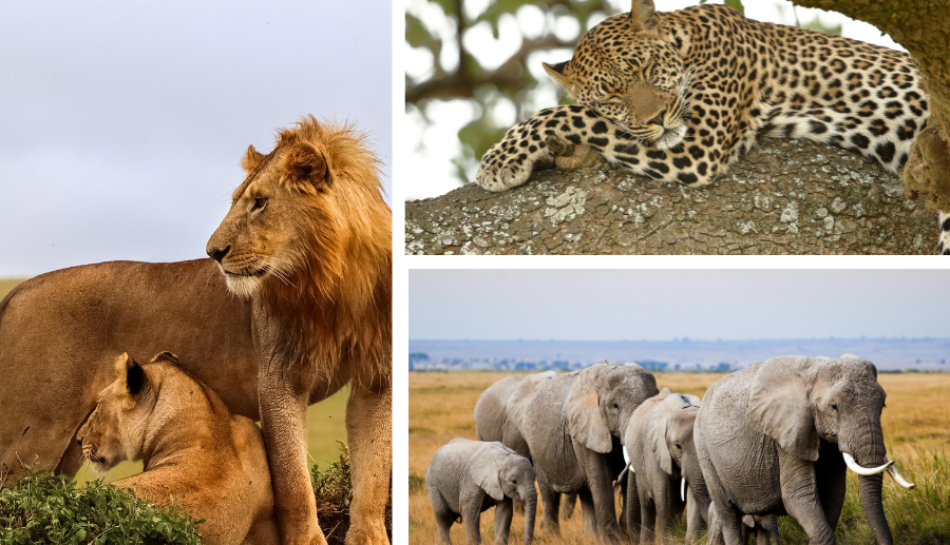
Before diving into individual species, it’s worth understanding why the Masai Mara is one of the most reliable safari destinations in Africa.
The Mara ecosystem is:
- Rich in permanent water sources
- Dominated by open savannah (which improves visibility)
- Home to large resident herbivore populations
- Supporting a high density of predators
Unlike some safari destinations that rely heavily on seasonal wildlife movements, the Mara has a strong resident ecosystem. That means there is always a baseline level of wildlife present, regardless of the time of year.
That’s the foundation for consistently good game viewing.
Herbivores: The Constant Presence
Herbivores are the backbone of the ecosystem — and the animals you’ll see most frequently.
Elephants
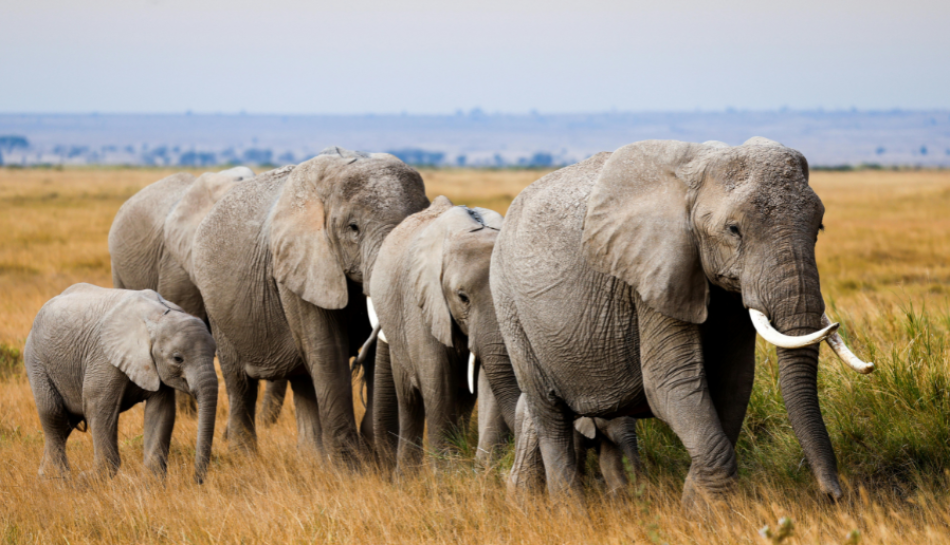
Behaviour:
- Live in matriarchal family groups
- Move steadily between feeding and water sources
- Spend most of the day eating
Likelihood of seeing them: Very high, year-round
Best time of day:
- Early morning and late afternoon (more active)
- Midday often spent resting in shade
Buffalo
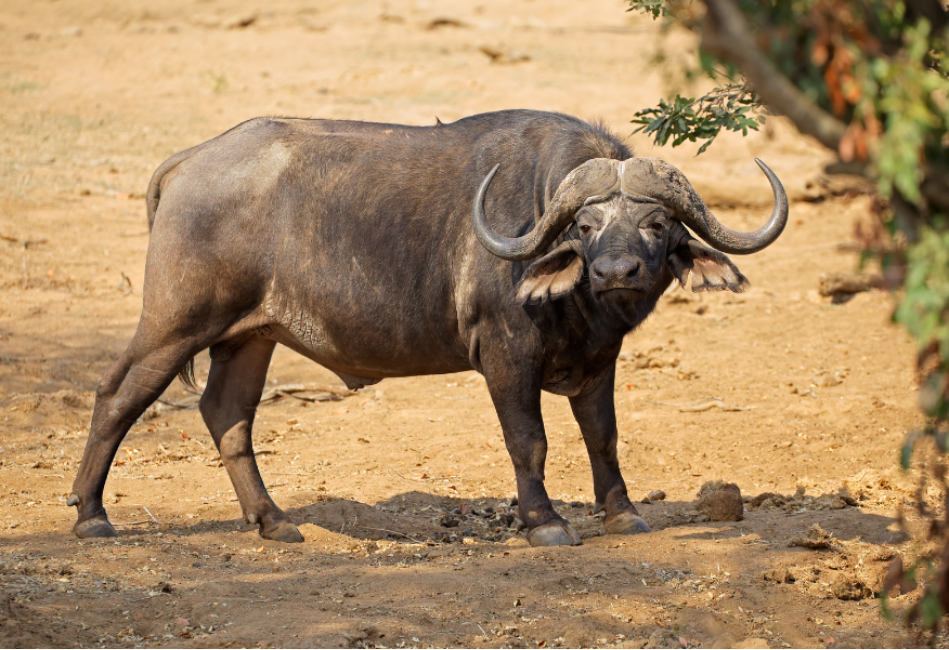
Behaviour:
- Move in large herds
- Highly social and protective
- Spend long periods grazing
Likelihood of seeing them: Extremely high
Best time of day:
- Early morning and late afternoon
- Often resting during peak heat
Buffalo don’t move far or fast compared to other species, so herds are regularly encountered. They’re also one of the key prey species for lions, which makes them central to predator activity.
Giraffe
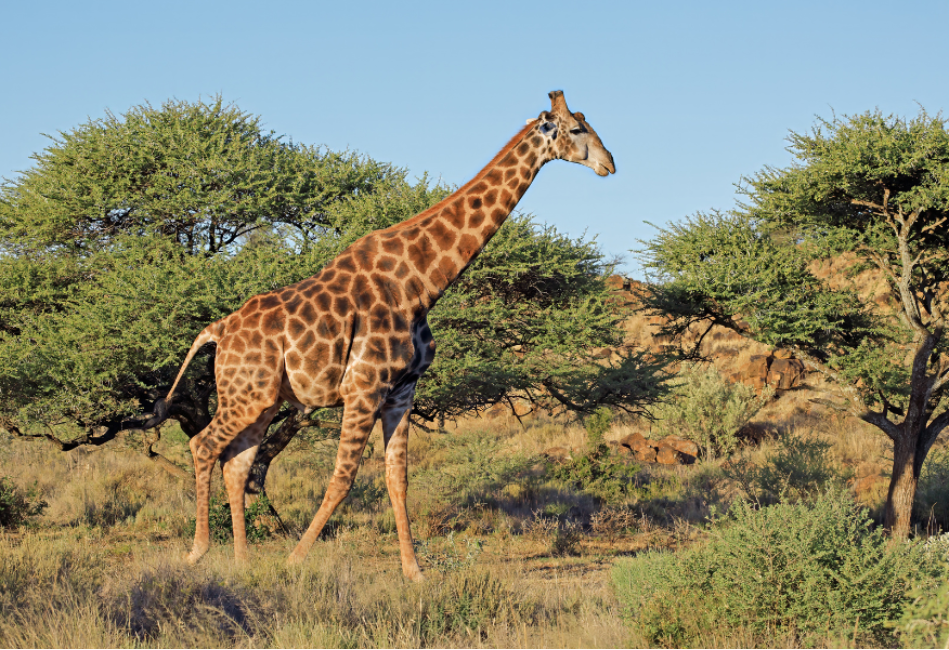
Behaviour:
- Feed on acacia trees
- Move in loose groups
- Generally calm and unhurried
Likelihood of seeing them: Very high
Best time of day:
- All day (they’re active feeders)
Their height and slow movement make them easy to spot from a distance. They’re often seen silhouetted against the horizon — one of the iconic safari images.
Zebra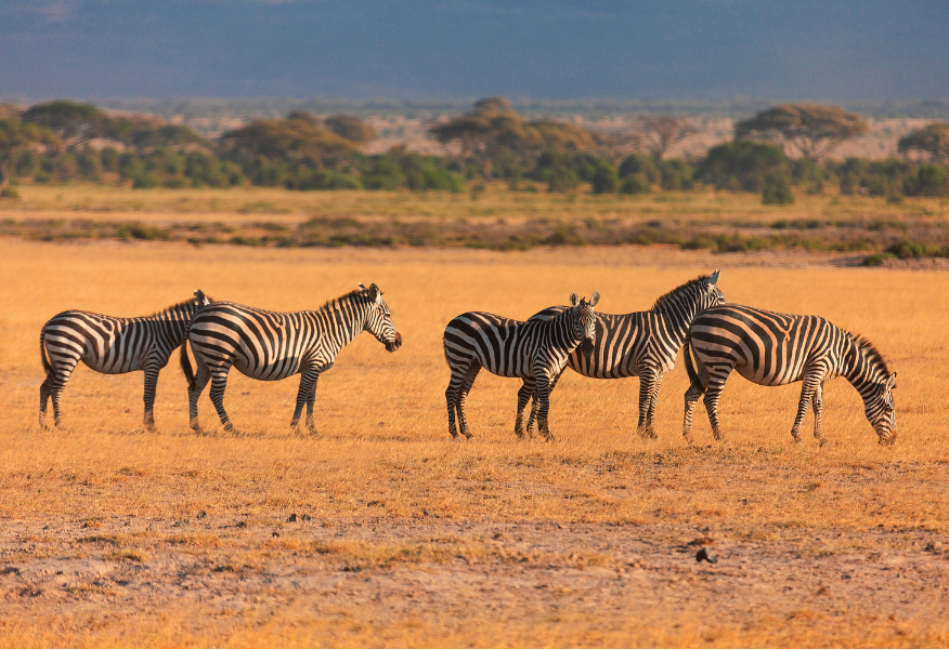
Behaviour:
- Highly social, usually in family groups
- Often mix with wildebeest and antelope
- Spend most of their time grazing
Likelihood of seeing them: Extremely high
Best time of day:
- Active throughout the day
Zebra are particularly noticeable due to their markings and numbers. They’re also an important part of the ecosystem, often acting as an early warning system — their strong eyesight and alert behaviour help signal the presence of predators.
Antelope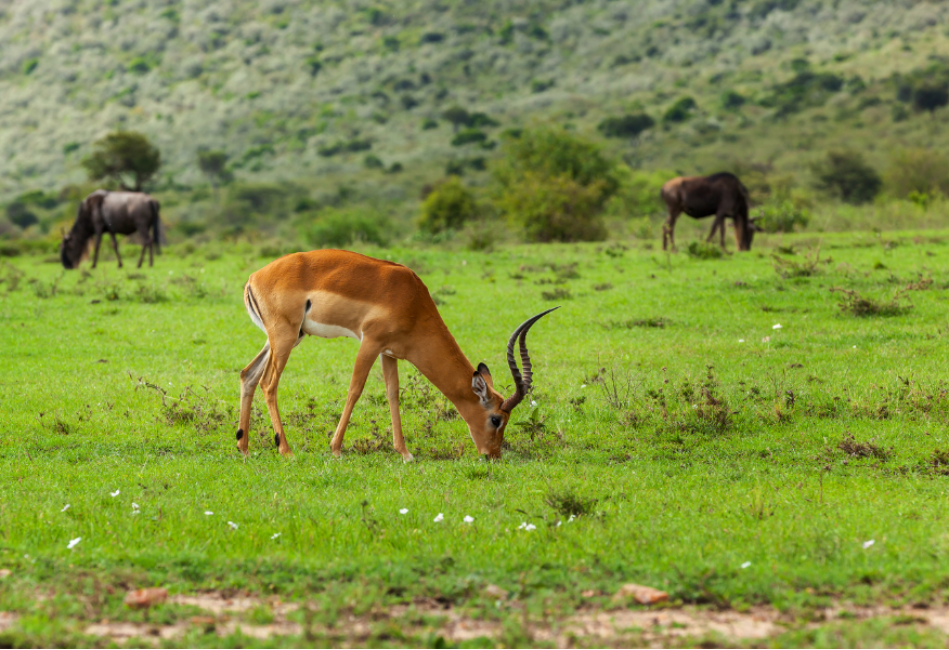
Behaviour:
- Constant grazers or browsers depending on species
- Highly alert and reactive to predators
- Often found in mixed groups or large numbers
Likelihood of seeing them: Extremely high
Best time of day:
- Active throughout the day, with peaks in early morning and late afternoon
Antelope form the foundation of the food chain in the Mara. Their abundance is what supports the high density of predators, and you’ll see them on virtually every game drive, often in large numbers spread across the plains.
Predators: The Main Event
While herbivores are constant, predators are what most people are hoping to see — and the Masai Mara delivers exceptionally well.
Lions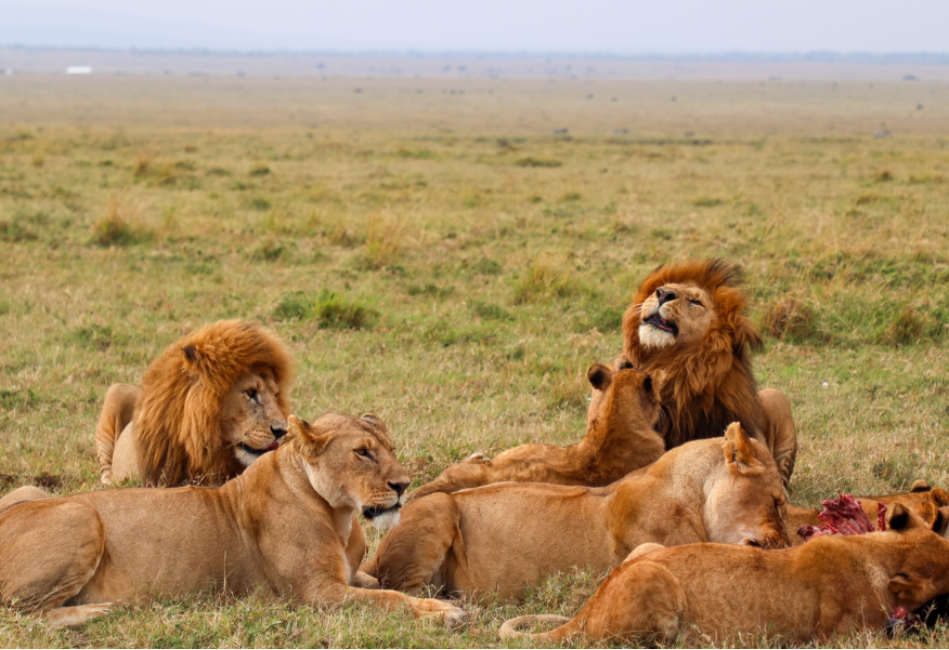
Behaviour:
- Live in prides
- Spend up to 20 hours a day resting
- Hunt mainly at night or early morning
Likelihood of seeing them: Very high
Best time of day:
- Early morning (often active or finishing a hunt)
- Late afternoon (becoming active again)
Because lions are social and relatively relaxed around vehicles, sightings can be long and detailed. You’ll often find them resting in the shade, interacting as a pride, or occasionally feeding on a kill.
Their predictability comes from:
- Defined territories
- Habitual resting spots
- Frequent sightings reported between guides
It’s very common to see lions multiple times over a few days.
Hyena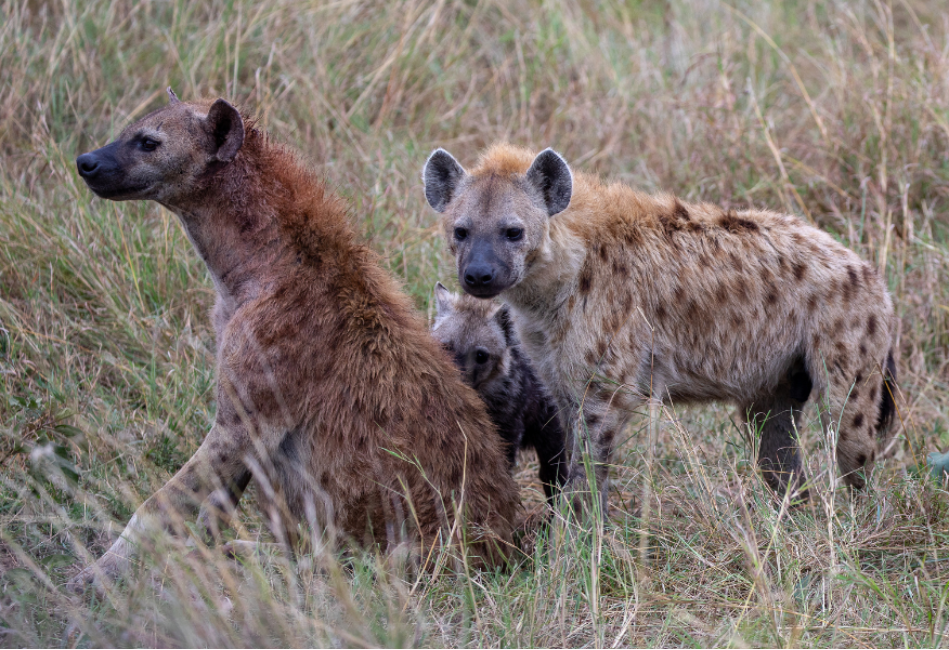
Behaviour:
- Highly intelligent and social
- Live in large clans
- Both hunters and scavengers
Likelihood of seeing them: Very high
Best time of day:
- Early morning (returning from hunting)
- Evening and night (most active)
Hyenas are often overlooked, but they are among the most behaviourally interesting animals on safari. You’ll see them moving with purpose, interacting within clans, or competing with other predators.
They’re also less sensitive to heat than lions, so they can be active when others are resting.
Cheetah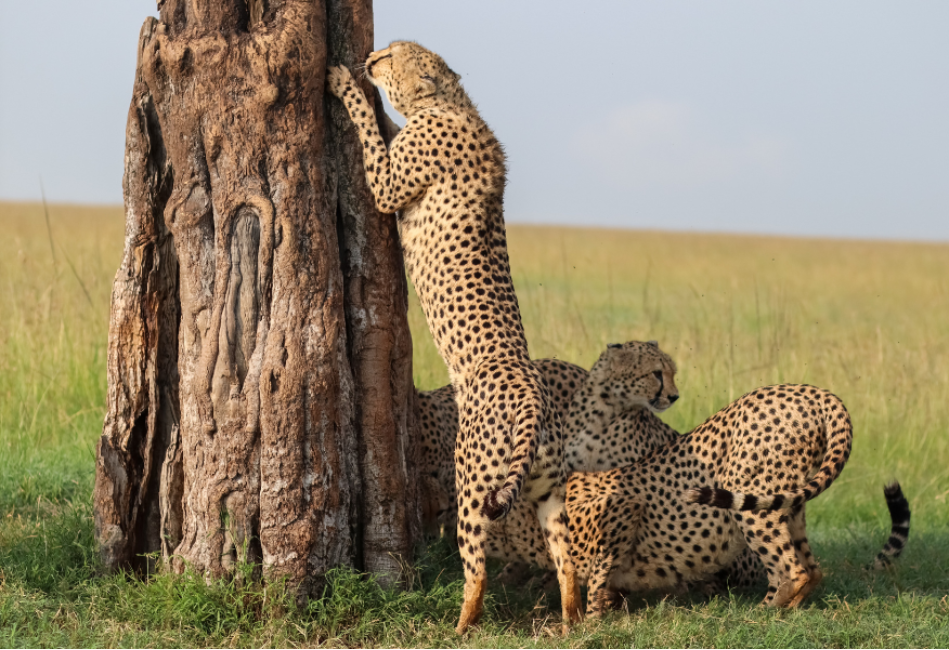
Behaviour:
- Diurnal hunters (hunt during the day)
- Prefer open terrain
- Often seen resting on termite mounds
Likelihood of seeing them: Good
Best time of day:
- Early morning
- Late afternoon
Cheetahs rely on visibility to hunt, which makes the Mara’s open landscape ideal. They’re often spotted scanning for prey or resting in slightly elevated positions.
Their predictability comes from:
- Preference for open plains
- Daytime activity
- Distinctive posture and behaviour
With a knowledgeable guide, sightings are relatively frequent.
Leopards: The Elusive One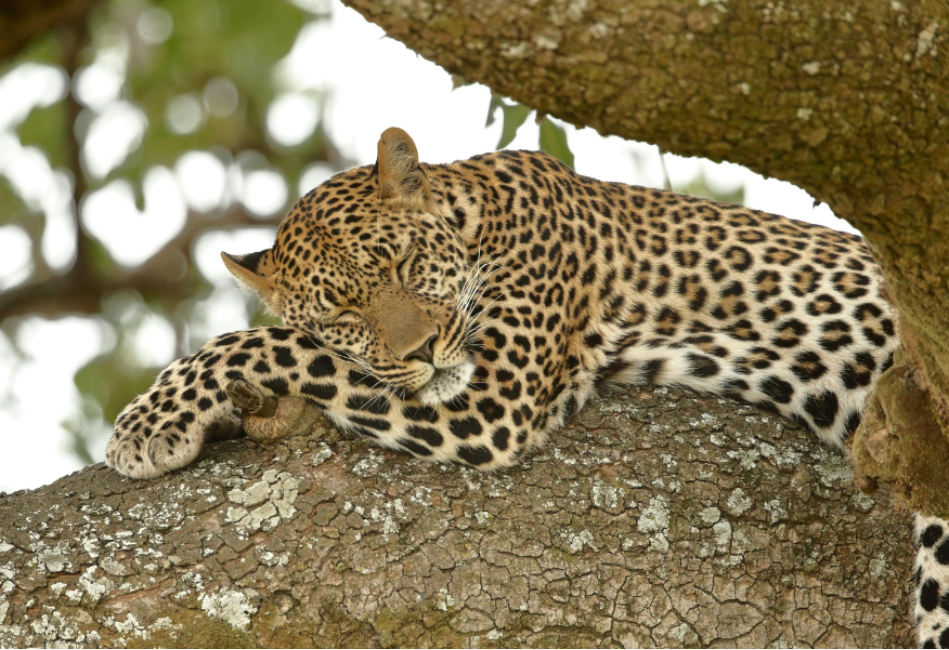
Behaviour:
- Solitary
- Extremely secretive
- Prefer dense vegetation and riverine areas
- Spend significant time in trees
Likelihood of seeing them: Moderate, but variable
Best time of day:
- Very early morning (around sunrise)
- Late afternoon
- Night (though night drives are limited in many areas)
The key to understanding leopards is this: they are not rare — they are just difficult to see.
Unlike lions:
- They don’t live in groups
- They avoid open areas
- They actively minimise visibility
A leopard can be just a few metres away and remain completely unnoticed.
They also:
- Rest in trees during the day
- Move silently through dense cover
- Hunt alone and often at night
This combination makes sightings highly dependent on:
- Guide experience
- Knowledge of territories
- Timing and luck
When you do see one, it’s often a fleeting but very special moment — or, occasionally, a perfectly positioned leopard draped over a tree branch.
Planning a Kenya luxury safari or Masai Mara experience?
We design tailor-made luxury African safari tours, combining the finest Masai Mara luxury camps, seamless logistics, and carefully curated itineraries to match your travel style.
Explore one of our most popular Masai Mara Luxury Safari
Click here to Explore Our Most Popular Masai Mara Luxury Safaris